

THE BEST BIRDING SPOT IN UGANDA(MABAMBA SWAMP)
Uganda’s year round conducive climate, abundant water sources and diverse vegetation cover make it one of the best birding destinations in Africa. Mabamba swamp is one of the…
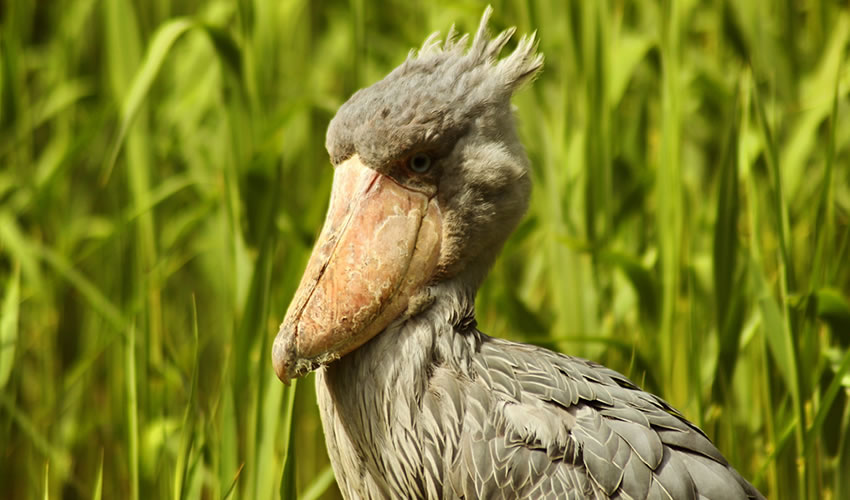
Uganda’s year round conducive climate, abundant water sources and diverse vegetation cover make it one of the best birding destinations in Africa. Mabamba swamp is one of the best birding spot in Uganda known for shoebill traking and other birds Vast species of birds fly in from around the world throughout the year and about 1,080 bird species have been recorded.
Bird watching can be done in Uganda’s many National Parks and forests as well as during boat rides where birds can be seen by the banks of various water bodies in the country.
Mabamba Swamp.
Mabamba swamp Located on the edge of Lake Victoria, Mabamba Bay Wetland is one of few places where the rare Shoebill Stork can be found. Mabamba’s proximity to Lake Victoria provides the perfect conditions for birds especially those that like to live near water. A canoe rode through Mabamba swamp is a great way to explore the abundant bird species which include; the Shoebill Stork, Malachite Kingfisher, Swamp Flycatcher, Pied Kingfisher, Papyrus Gonolex, Black-headed Heron, African Open-billed Stork, Black Kite, African Marsh Harrier among many others. Mabamba swamp is one of the 10 Best Birding Spots in Uganda.
SHOEBILL
The name shoebill comes from the shape of their bill, which looks a bit like a Dutch clog shoe. But taxonomists who described it also thought the bill shape resembled the head of a baleen whale, and named the species Balaeniceps rex—which means “whale-head king.” Other informal names for these birds are the boat bill, the bog bird, and the swamp king.
With that enormous structure on their face, which can be nine inches long and four inches wide, shoebills might seem a little goofy. But don’t be fooled. That bill is a powerful tool, used to scoop up huge fish, stab them with the pointed hook on the end, and decapitate them with razor-sharp edges before swallowing.
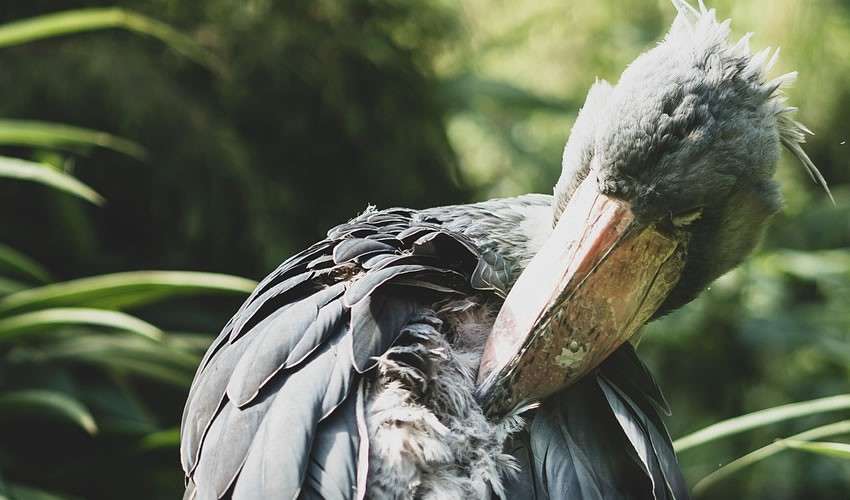
These birds are famous for standing motionless like a statue and staring intently into the water for hours at a time. They rarely blink, and the intensity of their golden-, green-, or blue-eyed gaze can be unnerving. Some have described it as the “death stare.” It’s a useful trait—the bird’s seemingly super-powered ability to focus means it can snare the best and choicest prey when it arrives.
Shoebills are masters of patience. They stand still and silent in or next to water, waiting for the right moment. Then they suddenly lunge forward, spreading their wings and plunging down bill-first into the water to ambush a fish. This lunge is called “a collapse,” and it is unexpectedly swift, taking only seconds, and performed with great accuracy and power. In fact, the collapse can be so violent that the bird’s beak and thick skull act as shock absorbers to protect it against injury.
What They Eat
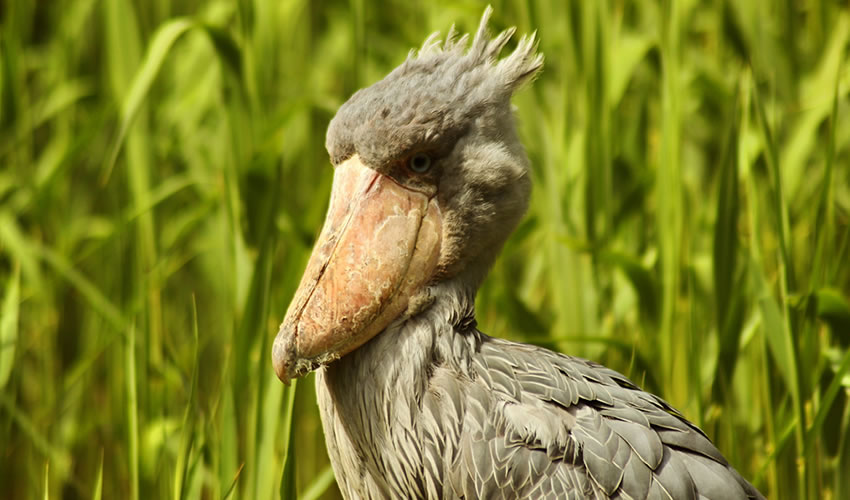
The shoebill’s favorite food is the lungfish, a marsh and mud dweller that reaches six feet in length and weighs nearly eight pounds. That’s one heck of a catch! Shoebills also eat eels, catfish, water snakes, and even small crocodiles.
Their Size
It comes as a surprise to many that the shoebill can be up to five feet tall. The bird is only inches shorter than an average person; if you stood next to one, it could almost look you in the eye. Couple that with an enormous wingspan of almost eight feet, and no wonder shoebills have an intimidating reputation. They aren’t very heavy, though, only weighing up to 16 pounds, and they can and do fly. But they only flap those big wings about 150 times per minute, one of the slowest rates of any bird.
Their identity
Their identity is elusive ,ever since they were described by Western scientists, shoebills have been the subject of debate among naturalists and taxonomists. How to classify these odd birds? They ended up placing the shoebill in its own unique genus, but as part of the stork family. However, more recent studies, including DNA, show that the shoebill is actually more closely related to pelicans than storks. The shoebill surprises just keep coming
OTHER BIRDS IN MABAMBA SWAMP
Other bird species at Mabamba include; Goliath Herons, Spur-winged White-winged Warbler, Gull-billed Terns, Whiskered Terns, Grey-headed Gulls, Papyrus Gonolek, yellow-backed weaver, Northern Brown-throated Weaver, White-winged Black Terns, Pygmy Geese, Malachite kingfisher, Papyrus Canary, Northern Brown-throated weaver, Carruther’s Cisticola, Blue-headed Coucal among many others.
Let's Plan Your African Adventure
Have questions about THE BEST BIRDING SPOT IN UGANDA(MABAMBA SWAMP) ? Our team is here to help you plan an unforgettable African safari with personalised advice and expert guidance.